What Happens If You Stop Your Weight Loss Injections? Weight loss injections have transformed the way people manage obesity and metabolic disorders. From Ozempic and Wegovy to Mounjaro, these medications have helped millions shed pounds by curbing appetite and improving insulin sensitivity.
But what happens if you stop your weight loss injections? The answer depends on your body’s metabolism, habits, and how you transition off treatment. In this detailed guide, we’ll explore the biological, emotional, and behavioral effects of stopping injections—and what you can do to maintain your hard-earned progress.
Understanding Weight Loss Injections
Weight loss injections, primarily GLP-1 receptor agonists such as semaglutide or tirzepatide, mimic natural hormones that regulate appetite and blood sugar levels. They make you feel full faster, reduce cravings, and slow digestion.
They’re not “magic shots,” though—they’re medical tools that work best when paired with healthy eating and consistent exercise.
How GLP-1 Injections Affect Metabolism and Appetite
These medications influence the gut-brain axis, sending signals of fullness to your brain and stabilizing insulin levels. When you stop taking them, your body gradually reverts to its baseline state—where appetite hormones like ghrelin rise and leptin sensitivity decreases.
As a result, many people notice their hunger returning and cravings becoming harder to control within weeks of discontinuation.
Why People Stop Weight Loss Injections
Even though they’re effective, people stop using them for various reasons:
- Cost: Some injections can exceed $1,000 per month.
- Side Effects: Nausea, fatigue, and digestive issues may discourage continued use.
- Goal Achievement: After reaching a target weight, users may wish to maintain naturally.
- Medical Advice: Doctors may recommend pausing treatment due to lab results or pregnancy.
Temporary vs. Permanent Discontinuation
There’s a big difference between a short pause and quitting for good. A brief break might cause minor fluctuations, but permanent discontinuation often triggers noticeable biological shifts—especially if lifestyle habits aren’t strong yet.
The Immediate Effects of Stopping Weight Loss Injections
When you stop your injections, the medication’s active compounds slowly clear from your system. Within a few weeks, the body’s appetite-regulating mechanisms reset, leading to the following changes:
Return of Appetite and Cravings
Without the drug’s appetite-suppressing effect, hunger signals increase. You might crave high-calorie foods again, especially sweets and carbs. This can be frustrating, but it’s a normal biological rebound.
Slowing Metabolism and Fat Storage
Weight loss injections keep your metabolism slightly elevated. Once discontinued, your metabolism can slow down—especially if calorie intake rises while activity levels drop. This combination often leads to gradual weight regain.
Long-Term Consequences After Stopping Injections
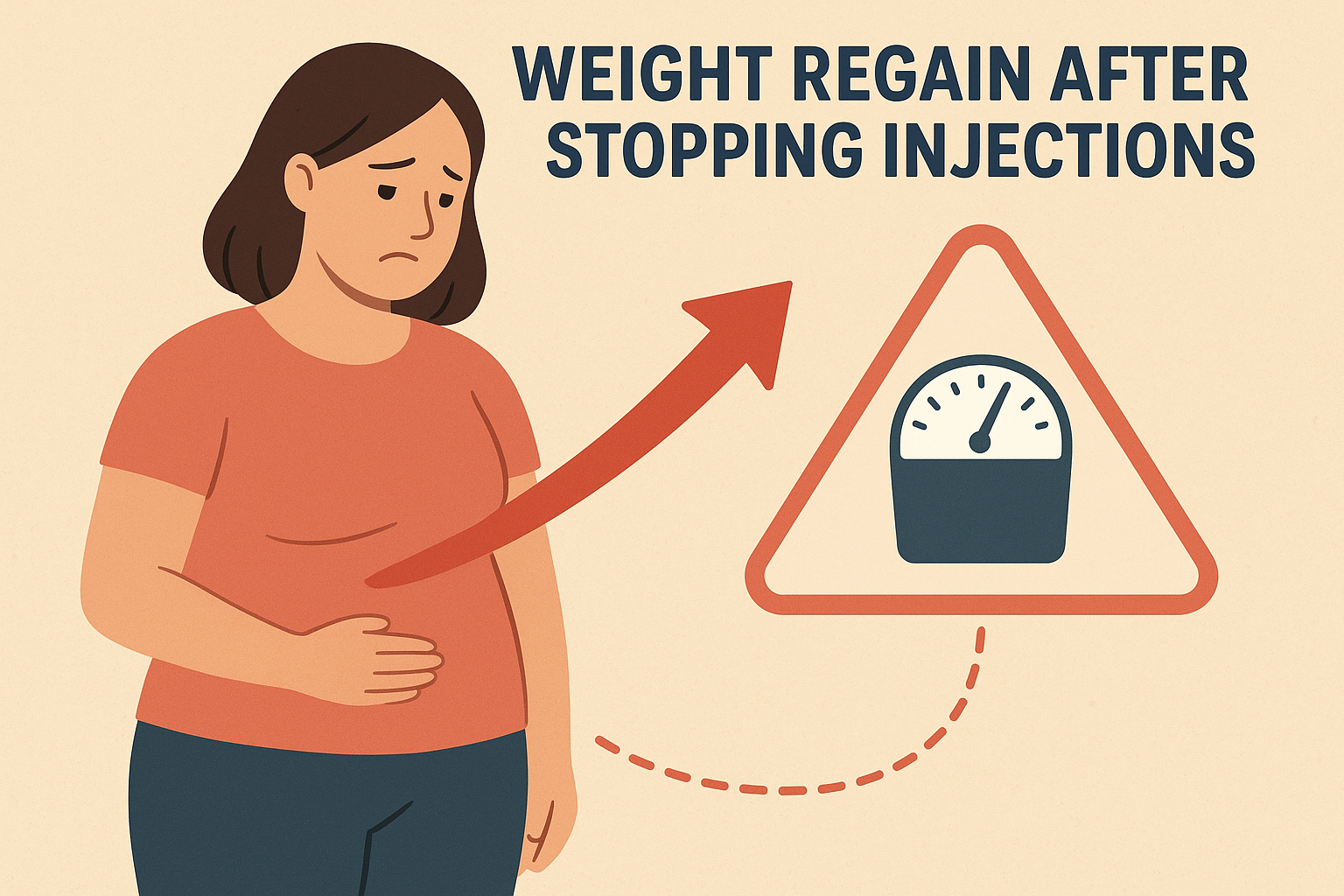
If lifestyle adjustments aren’t made, it’s common to regain two-thirds of the lost weight within a year of stopping injections. This is because the body seeks to restore energy balance and fat stores.
Emotional and Behavioral Changes
Many users experience frustration, guilt, or loss of motivation when they regain weight. Emotional eating can creep back in, especially during stress or fatigue. Building a mindful eating routine and emotional support network helps prevent relapse.
Gut Health and Digestive Changes
GLP-1 drugs slow gastric emptying. Once you stop, digestion speeds up again, which may cause temporary bloating or discomfort. Staying hydrated and eating fiber-rich foods supports a smoother transition.
Can You Maintain Weight After Stopping Injections?
Absolutely—but it requires intentional effort. Successful maintenance depends on sustainable habits and consistent monitoring.
Role of Lifestyle and Nutrition
A balanced diet rich in lean protein, vegetables, and healthy fats helps stabilize blood sugar and appetite. Incorporate regular physical activity—especially strength training—to preserve muscle mass and metabolism.
Importance of Continued Medical Supervision
Don’t stop your injections without talking to your healthcare provider. A gradual tapering plan, supervised by a doctor, minimizes rebound effects. Regular check-ins can help you adjust your nutrition and fitness plans safely.
Alternative Approaches After Discontinuation
There are several ways to maintain your results without returning to medication.
Behavioral and Cognitive Strategies
Cognitive-behavioral therapy (CBT), food journaling, and support groups can help manage cravings and emotional triggers. Apps like Noom or MyFitnessPal are also great for accountability.
Frequently Asked Questions (FAQs)
1. How quickly will I regain weight after stopping injections?
Most people notice some weight return within 3–6 months if no lifestyle changes are made.
2. Can I restart injections if I regain weight?
Yes, under medical supervision. Some patients cycle treatments or restart at lower doses.
3. Are there natural alternatives to GLP-1 drugs?
Certain foods like oats, beans, and apples contain natural appetite-suppressing fibers (GLP-1 stimulants).
4. Is it safe to stop weight loss injections suddenly?
Yes, but always consult your doctor. Gradual cessation can reduce side effects.
5. Will my metabolism permanently slow down?
No, it adapts temporarily. Regular exercise and protein intake can restore metabolic balance.
6. Can supplements replace injections?
Not fully. Some supplements support weight control but can’t replicate hormonal effects of GLP-1s.
Conclusion – Managing Life After Weight Loss Injections
Stopping weight loss injections doesn’t mean losing all progress—it means shifting gears. By maintaining mindful eating, staying active, and seeking professional guidance, you can preserve your results naturally.
Remember, weight management is a long-term journey, not a one-time event. Your body’s relationship with food, movement, and mindset matters far more than any injection.
Learn more from the Mayo Clinic about GLP-1 medications and safe discontinuation.